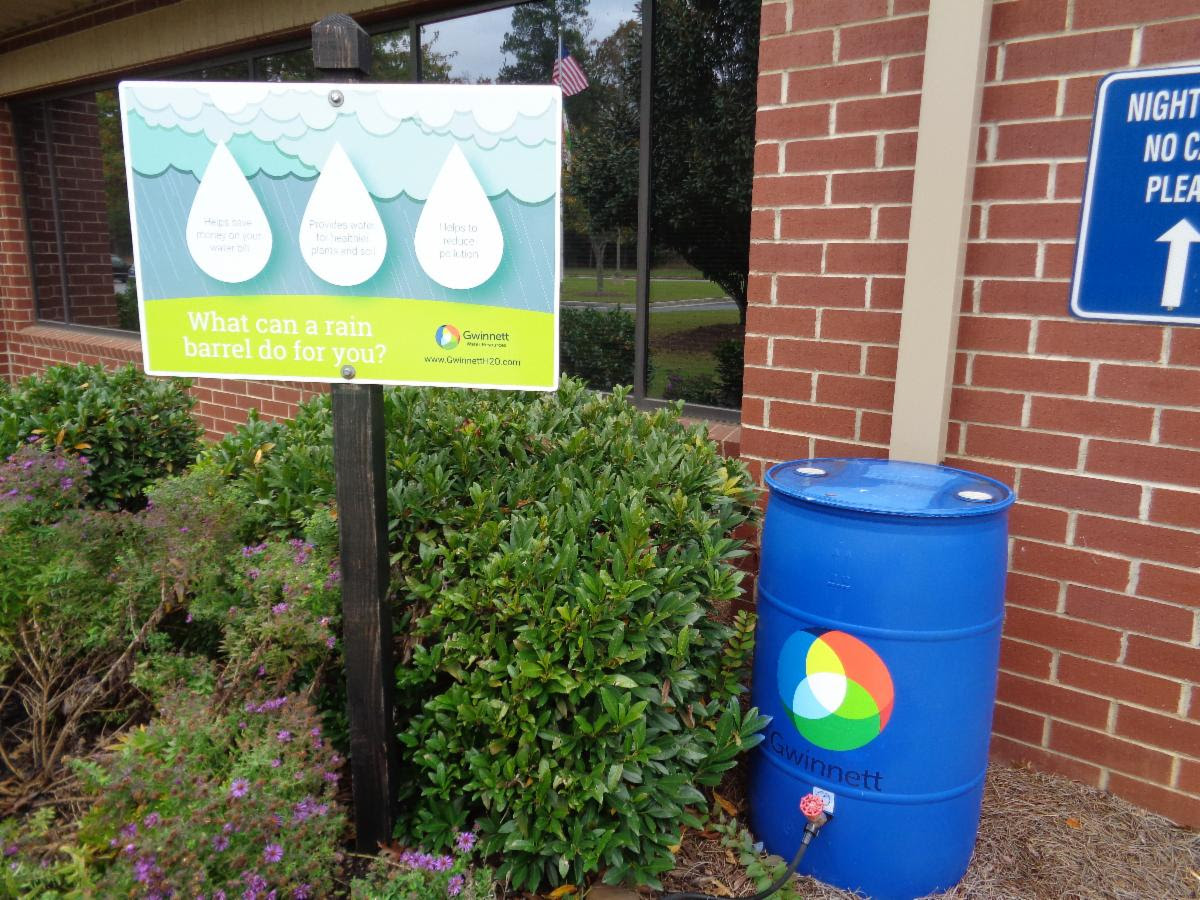
Why pay to water your flower beds when rain is free? Learn about water conservation through rainwater harvesting and how it can save you money on your water bill at the Rain Barrel Water Workshop on Saturday, February 28, from 10:00 am to noon at the Grayson Senior Center. Registration is required.
Classes fill up quickly and a $40 pre-payment is required to take home your new rain barrel. To register and learn about other upcoming workshops, visit the Events and Workshops page.
(A)Water Saving — Tips :
(1) Inside the Home
- Fix Leaks Immediately: A leaky toilet can waste 200 gallons a day. To check, add a few drops of food coloring to the toilet tank; if color appears in the bowl after 15 minutes without flushing, you have a leak.
- Optimize Bathroom Habits:
- Turn off the tap: Don’t let water run while brushing your teeth, shaving, or lathering your hands.
- Shorten showers: Aim for under five minutes to save up to 1,000 gallons per month.
- Collect warm-up water: Place a bucket in the shower while waiting for the water to heat up, then use it for plants or to manually flush the toilet.
- Efficiency in the Kitchen:
- Run full loads: Only operate the dishwasher and washing machine when they are completely full.
- Scrape, don’t rinse: Scrape food scraps into the trash or compost instead of using the garbage disposal or rinsing dishes before the dishwasher.
- Wash produce in a basin: Clean fruits and vegetables in a bowl of water rather than under a running tap.
- Upgrade Fixtures: Replace old equipment with WaterSense labeled products, such as low-flow showerheads, faucets, and high-efficiency toilets.
(2) Outside the Home
- Water Wisely:
- Time it right: Water your lawn in the early morning or evening to minimize evaporation.
- Check the weather: Don’t water if rain is in the forecast.
- Skip the hose: Use a broom instead of a hose to clean driveways, sidewalks, and patios.
- Landscape for Conservation:
- Plant natives: Choose drought-tolerant or native plants that require less irrigation.
- Use mulch: Apply mulch around plants and trees to help soil retain moisture.
- Install rain barrels: Collect rainwater from your gutters to use for outdoor gardening.
- Pool Maintenance: Keep your swimming pool covered when not in use to reduce water loss from evaporation.
- Water Wisely:
(3) Additional Resources
- Rebates: Many local utilities offer rebates for installing water-efficient appliances or replacing turf.
- Water Calculators: Use tools like the Alliance for Water Efficiency calculator to identify your biggest areas of waste.
(B) Water Conservation By Rainwater Harvesting — Tips :
(1) Types of Harvesting Systems
- Rain Barrels: The most common residential method, typically holding 50–75 gallons. These are placed under downspouts and are ideal for small-scale gardening.
- Cisterns: Larger storage tanks (above or below ground) that can hold hundreds to thousands of gallons. They are often used for whole-home non-potable needs like toilet flushing and laundry.
- Rain Gardens: Shallow depressions planted with native vegetation that capture runoff, allowing it to soak into the ground rather than entering storm drains.
- Permeable Paving: Using materials like brick, gravel, or porous concrete allows rainwater to filter directly into the soil.
(2) Essential Installation Tips
- Optimize Your Catchment: Ensure your roof is clean and made of safe materials like slate, aluminum, or galvanized iron if you intend to use the water for more than basic gardening.
- Install a First-Flush Diverter: This device redirects the initial “wash” of rain—which contains the most dust, bird droppings, and debris—away from your storage tank.
- Use Screens and Lids: Always cover tanks with a fine mesh screen to prevent mosquito breeding and keep out leaves.
- Stability and Gravity: Place storage tanks on a flat, level, and sturdy base (a full 50-gallon barrel weighs over 400 lbs). Elevating the tank can provide better water pressure for gravity-fed hoses.
(3) Maintenance and Best Practices
- Regular Cleaning: Clean your gutters, downspouts, and the interior of your tanks at least once a year to prevent sediment buildup and algae.
- Winterization: In cold climates, drain and store barrels upside down during winter to prevent ice damage.
- Safety First: Collected rainwater is generally considered non-potable. Do not use it for drinking or cooking without advanced filtration and UV disinfection.
- Legal Check: Verify local regulations before installation. Some states or municipalities have restrictions on storage capacity or specific usage.
(4) Useful Resources
- Calculators: Use the Texas A&M Extension Calculator to estimate your roof’s harvest potential.
- Incentives: Check with your local water utility for rebates or tax exemptions on harvesting equipment.
- Professional Guidance: The American Rainwater Catchment Systems Association (ARCSA) provides a directory of certified professionals.
Views: 11